
Rain chains are a great way to add a decorative feature to your yard while also serving a functional purpose.
We’ve seen quite a bit of rain recently, and our aquifer and landscapes are loving it! What better way to enjoy the welcomed rain than by sitting on your patio and listening to the melodies created from water cascading through the metal cups or links of a rain chain?
Rain chains are essentially decorative downspouts that help direct water run-off from your roof. These elegant pieces have been used to help prevent soil erosion in Japan for hundreds of years, and now people all over the world are using them around their homes.
Cup style vs. links
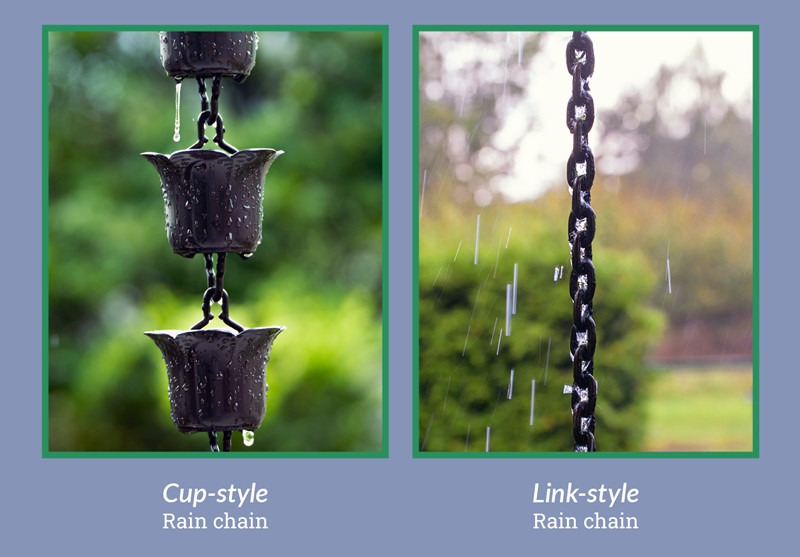
While rain chains come in many different designs, there are two main types to choose from: Cup style and links.
As the name implies, cup-style chains are cups linked together so rainwater can funnel through them. These designs can handle more water flow with less splashing. Link-style rain chains are a series of links that guide the water downward. They can’t handle as high volume of water flow as the cup style and typically cause a bit of splashing during heavy rain events.
The type of chain you choose depends on personal preference.
Installation
The best and easiest way to use rain chains is to attach them to your gutters. But you can still use them if you don’t have a gutter system by attaching them to your roof in areas where rain tends to flow, such as corners or steep slopes. Important note: Do your research because incorrect installation can damage your roof tiles or gutter.
When installing a rain chain on your gutter, it’s recommended to put it in an area where there may be a crack, or to replace a traditional downspout. The idea is to place it where water tends to flow the most during rain events. Many rain chains on the market come with kits to help secure them to your gutters.
When you’ve finished installing your rain chain to your gutters or roof, don’t forget to secure it to the ground too. This will help optimize the drainage efficiency of your chain and prevent water from splashing during high winds.
Drainage
To get the most out of your rain chain and prevent water pooling and runoff, it’s important to consider what kind of drainage feature you want. In fact, the drainage feature you choose can completely change the look and vibe of the rain chain in your landscape all together.
Popular options include placing rocks on top of some landscape fabric right under the chain and letting it seep down into the soil or having the rain chain feed directly into a rain barrel for rainwater harvesting.
Another idea is to use large pots with a drainage hole at the bottom filled with gravel and rocks where water can slowly drain through the rocks and return to the soil.
You can also use your landscaping to your advantage. By placing a rain chain in a pre-existing garden bed, or planting a rain garden around it, the plants will help soak up excess water. Try to opt for plants that can handle “wet feet” when it rains and extended dry periods and hot summers. Inland sea oats are great for this situation. Their extensive root systems soak up water very well, and since this plant is native to our region it’s adapted over time to withstand hot and dry conditions.
Rain chains are a great way to add a decorative feature to your yard while also serving a functional purpose. Just do some research to determine what method works best for your particular landscape and situation.
With so many creative ways to incorporate them into your landscape, you can make it as simple or as complex as you want. Then, just wait for the rain.