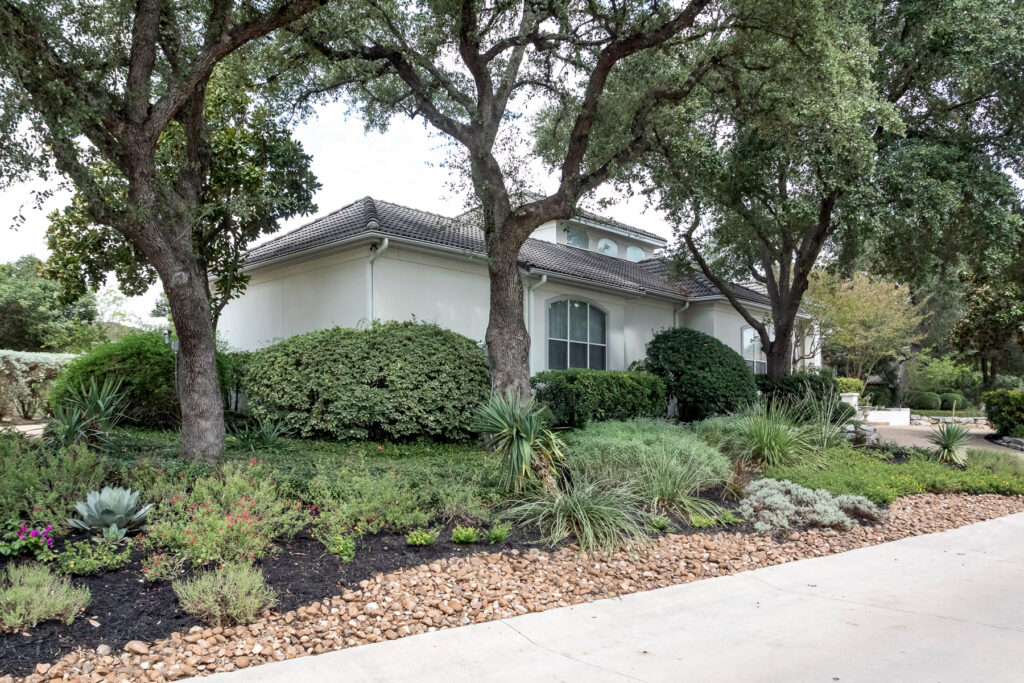
A landscape bed is the perfect place to plant shade overhead — and SAWS WaterSaver coupons can help you do that!
San Antonio is a great place for trees. We need only landscape accordingly.
Instead of focusing on grass and all the effort it takes to keep it green, look up! The tree canopy above can drop temperatures beneath it by as much as 40 degrees.
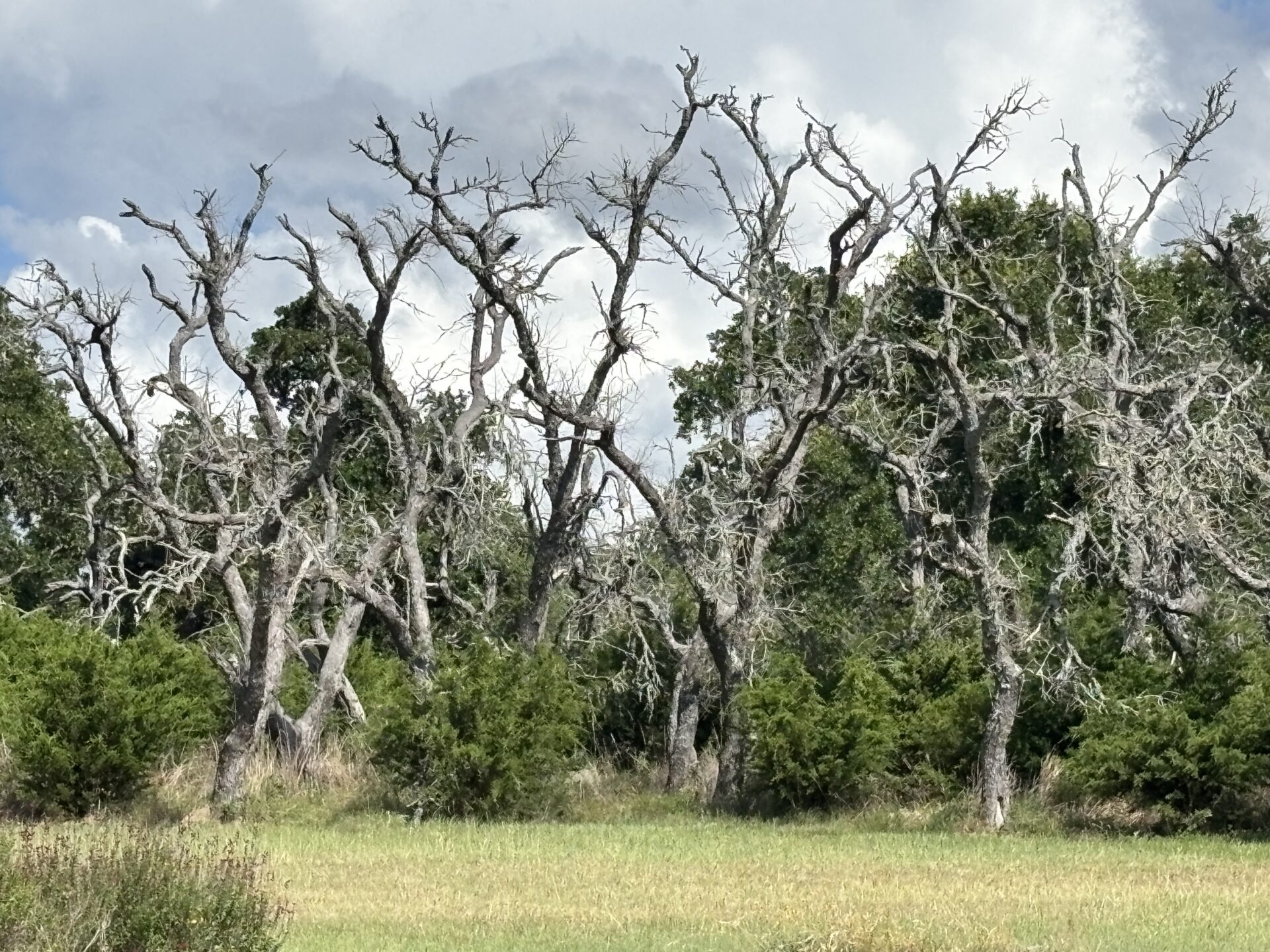 Though much longer lived than turfgrass, trees are not permanent. It’s estimated at least 20% of our local tree canopy has been lost in the past 20 years. Whether due to rapid development, disease, ongoing drought, or extreme wind and weather, losses have accelerated among both young and mature trees, amplifying the effects of our urban heat island.
But you and your WaterSaver landscape beds can help change that! If your yard has a stump or recently lost a tree, let that be an invitation to replace the shade. Bonus: the timing could not be better as cool weather months are ideal for adding trees to your landscape.
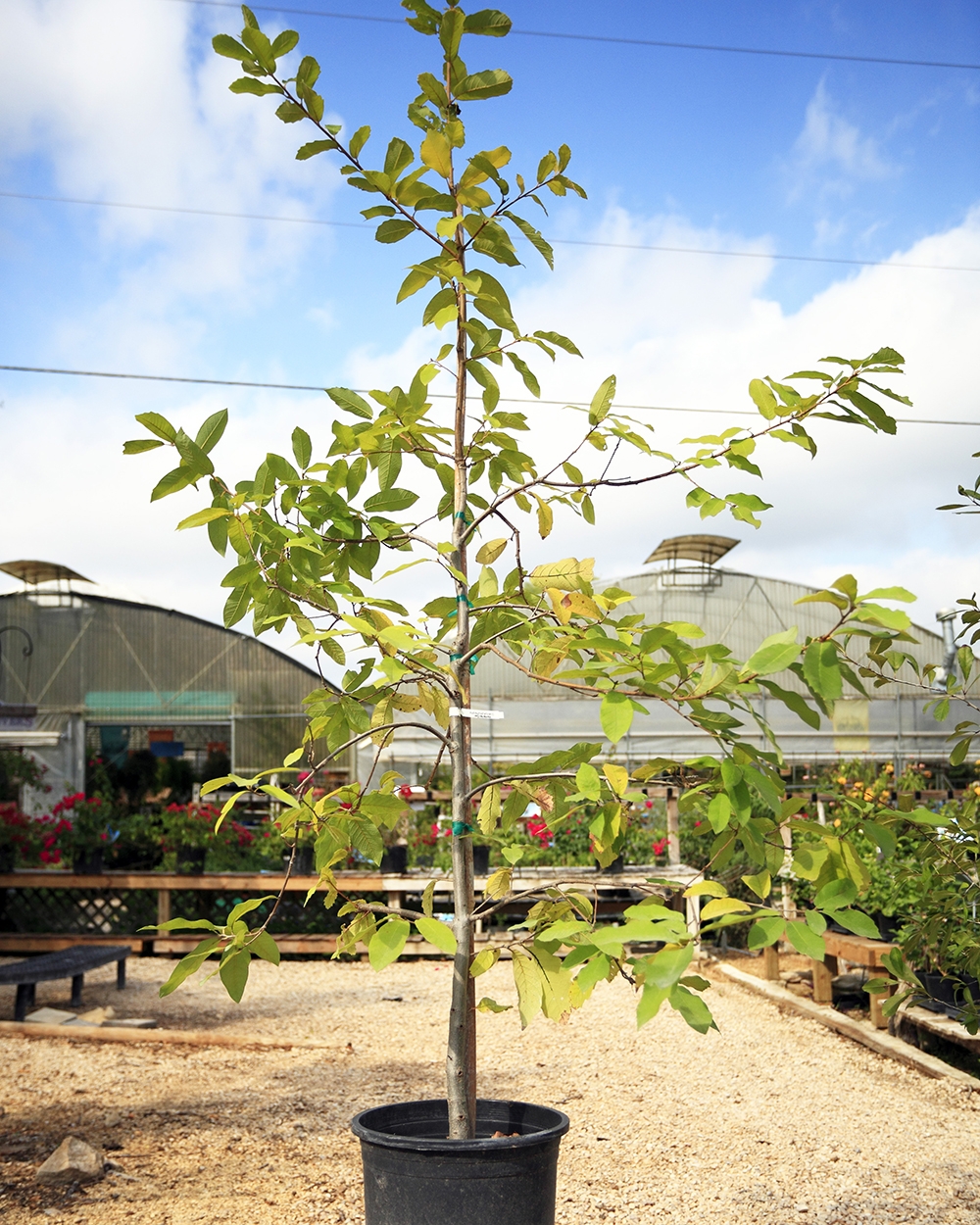 A WaterSaver landscape bed is a perfect place to put in new tree plantings, as they’re safe from whirling blades of lawnmowers and weed eaters.
For 1-gallon sizes, trees can be inserted among existing WaterSaver plants, and for 3-gallon and larger sizes, the bed can be bumped out to expand the available area.
In the first few seasons of a WaterSaver landscape bed, many trees will typically volunteer on their own. Any trees germinating from the existing seed bank will first appear as weeds (especially in established neighborhoods where existing trees have contributed their offspring). These can include all kinds of oaks, cedar elms, redbuds and mountain laurels.
Many of the first volunteers in any tiny forest are hackberries, which quickly become instant shade and nurse plants for slower-growing trees. Don’t be so quick to dismiss hackberries. They serve an important role in restarting the microcosm of soil organisms needed in an urban forest and quickly solve our shade deficit. Just look to the San Antonio Botanical Garden, which retained hackberries to provide a pleasant forest edge to different areas in its native Texas sections.
Though still uncommon in intentional landscape plantings, hackberries make up a natural percentage of the local shade canopy. One local species is among those recommended for the San Antonio region (pdf) and native nurseries have even begun selling hackberry trees.
Evaluate your shade needs. Wherever your landscape touches asphalt — whether that be the driveway or street — temperatures are elevated. Consider adding shade overhead instead of grass underfoot.