

Native soils get a bad rap, but with a little extra care — and organic matter — they can be supercharged.
Your plants are only as happy as the soil that they live in. If you’ve been battling packed clay, sandy loam, clay loam or thin Hill Country soils, your soil may be screaming for improvement.
Meet biochar.
This charcoal-like product is made through a process called pyrolysis, which involves burning organic matter in low-oxygen environments. Instead of burning to ash, the waste is baked into pure, stable carbon.
Biochar is different than charcoal or other carbon products in the way that it’s used for soil applications or broader environmental management. They have similar properties as they both carry energy, but many types of biochar don’t burn easily, and charcoals aren’t typically made to amend soil issues.
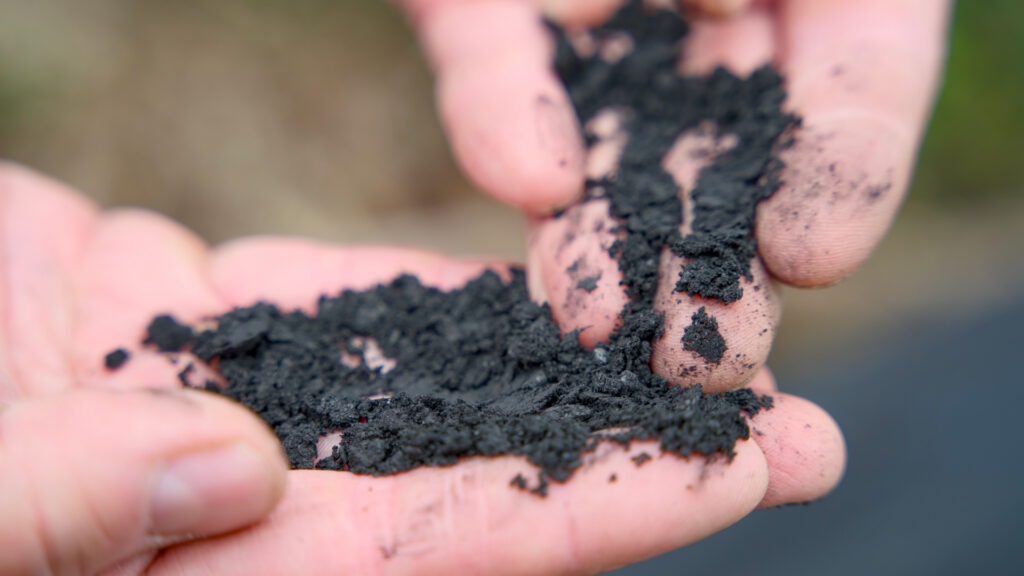
Thousands of years ago indigenous communities in the Amazon rain forest created incredibly fertile “terra preta” or black earth, by mixing charcoal into the soil. Today, scientists are studying those exact fields and have discovered these soils remained rich and productive centuries later.
This indigenous knowledge is incredibly relevant in Texas today. Texas is home to over 1,300 distinct soil types. Right here in San Antonio, you can traverse a few miles and hit three completely different soil types. Because our soil varies so much, we need flexible, customizable solutions to keep it healthy.
Biochar acts like a microscopic sponge in your garden, giving your soil higher water retention and keeping your plants hydrated during blazing hot droughts. Biochar loosens up heavy clay so roots can breathe and adds structure to sandy soil. Additionally, its honeycomb structure capture more water along with nutrients, and allows microorganisms to thrive.
Biochar won’t solve all your gardening problems overnight, but there are many varieties available that are tailored to amend different soil problems.
Sometimes, the best ideas for modern environmental care are buried deep in practices of the past.
Ellie Culverhouse is an intern with SAWS Conservation.
