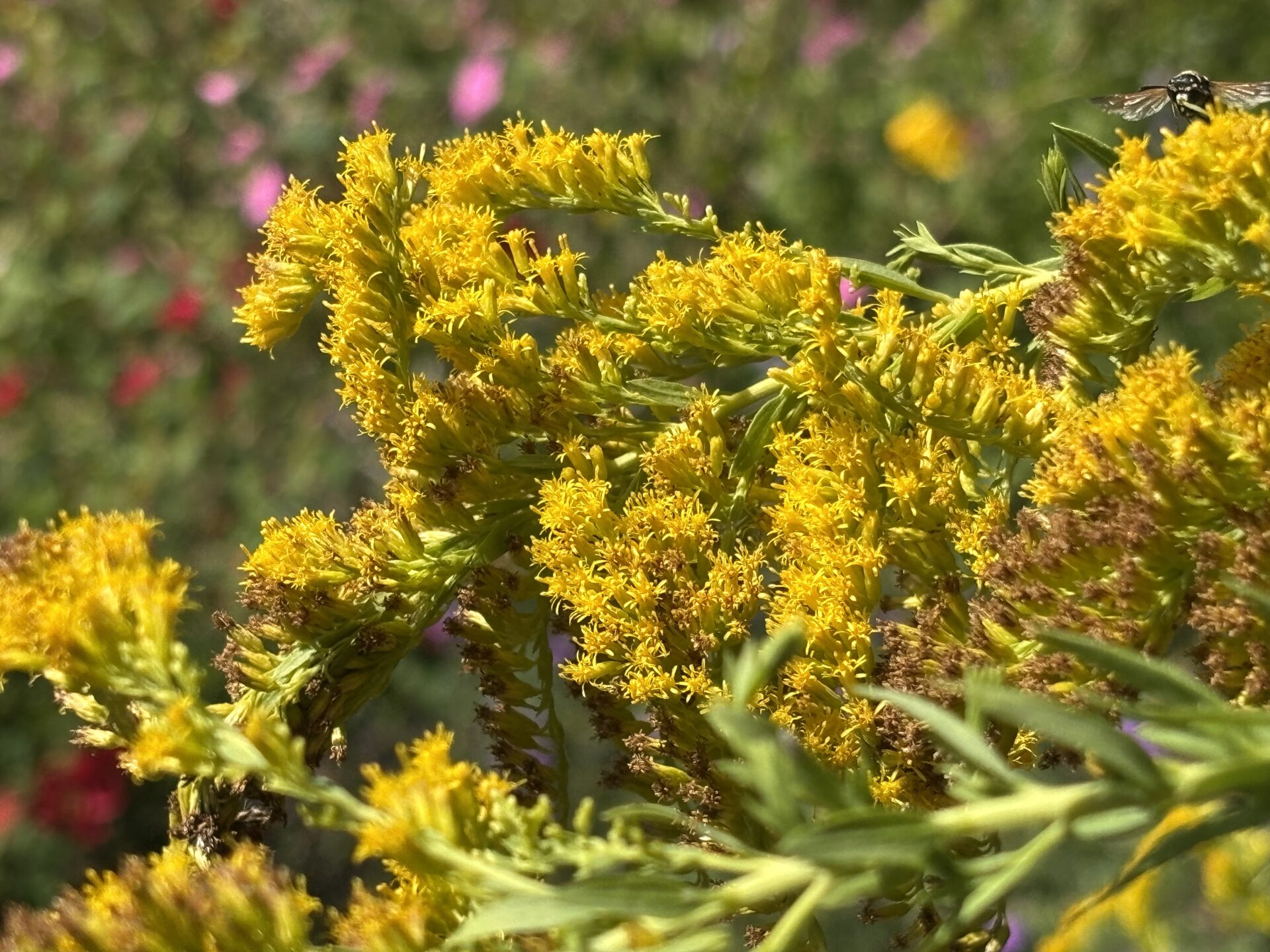
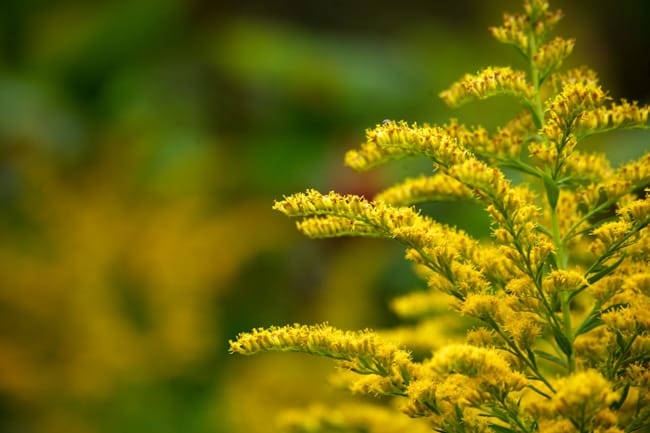
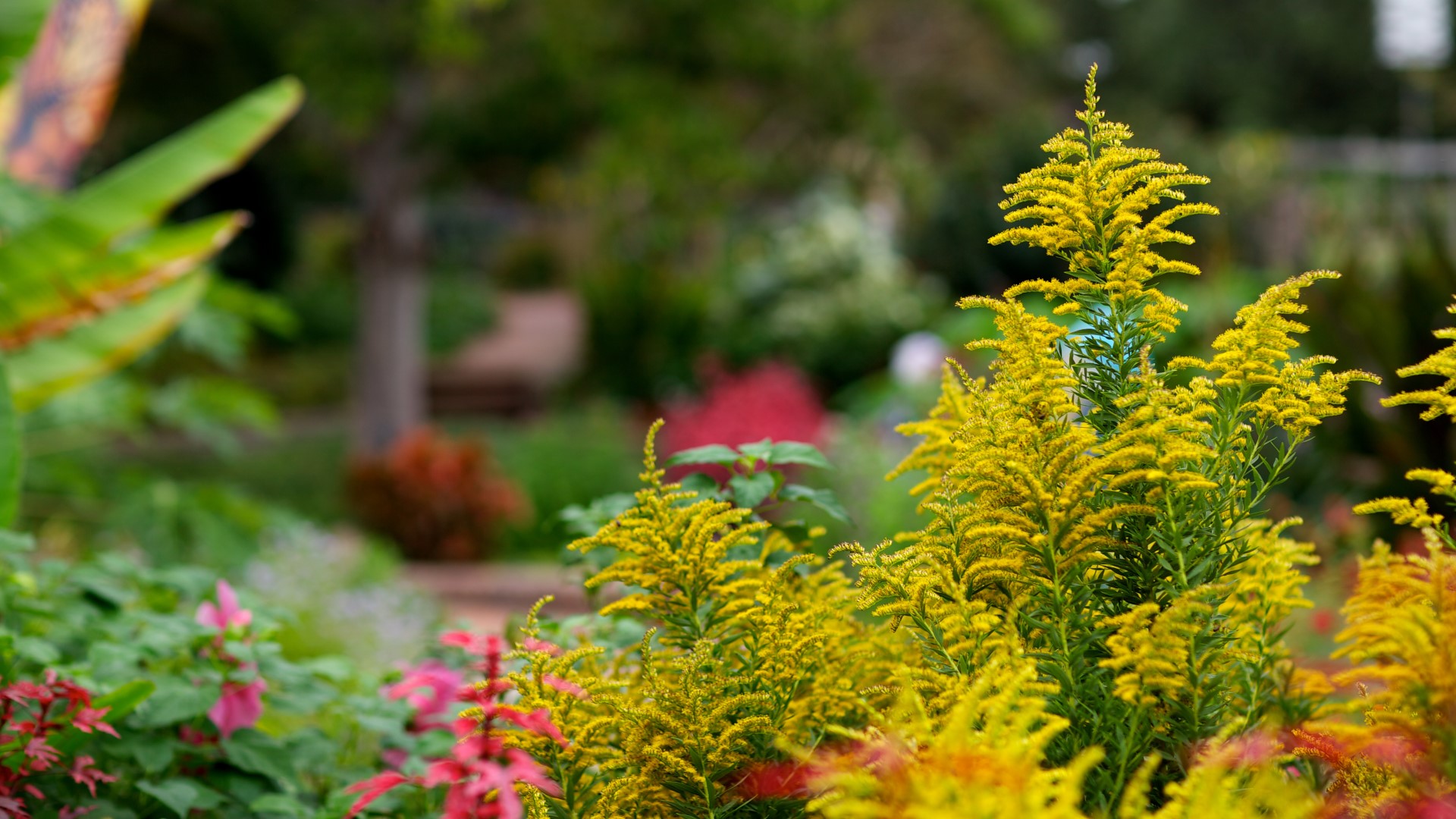
Tall Goldenrod, Roughstem Goldenrod, Field Goldenrod, Julia's Goldenrod, Seaside Goldenrod
About This Plant
Deciduous
Flowering
Attracts Pollinators
Attracts Birds
Attracts Butterflies
Full Sun
Low Water
Sun. An herbaceous perennial with an erect or decumbent branching form and dazzling flowerheads, especially in late summer and autumn. Goldenrod attracts butterflies, wasps, and birds, and makes an attractive ornamental. Give it some room, and expect it to spread; the volunteers are easy enough to weed out, but do it early in the year before they reach full size. 29 goldenrod species are native to Texas, including Tall Goldenrod (Solidago altissima) Roughstem Goldenrod (S. rugosa) Prairie Goldenrod (S. nemoralis) and Julia’s Goldenrod (S. juliae) in south-central Texas. Seaside Goldenrod (Solidago sempervirens) is evergreen and can withstand light freezes, though dieback to the ground is possible in harsher winters.
For many years goldenrod was passed over in the garden because the pollen was believed to cause the hay fever now attributed to ragweed (Ambrosia spp.) It was long adopted in European gardens before it finally found acceptance in North America.
Origins: Central U.S. and Canada; various species exist.
Maintenance
Plan on weeding seedlings and cutting back in winter.