
The scorching heat is predicted to linger. So stay cool and stick to these basic tasks.
Shall I compare thee to a summer’s day? Maybe not — just about any other month of the year would be more lovely and temperate than August. Had Shakespeare written in Texas, I’m certain he would have picked another season for flattery.
With our scorching heat dome predicted to linger, summer temperatures can be just as hard on gardeners as they are on plants.
We’ll exercise brevity in our seasonal recommendations and stick to the basics:
- Work in the morning. The humidity has dropped so much that mornings are surprisingly (and momentarily) pleasant enough to check over new plantings and finish up select tasks like light pruning, mulching and watering.
-
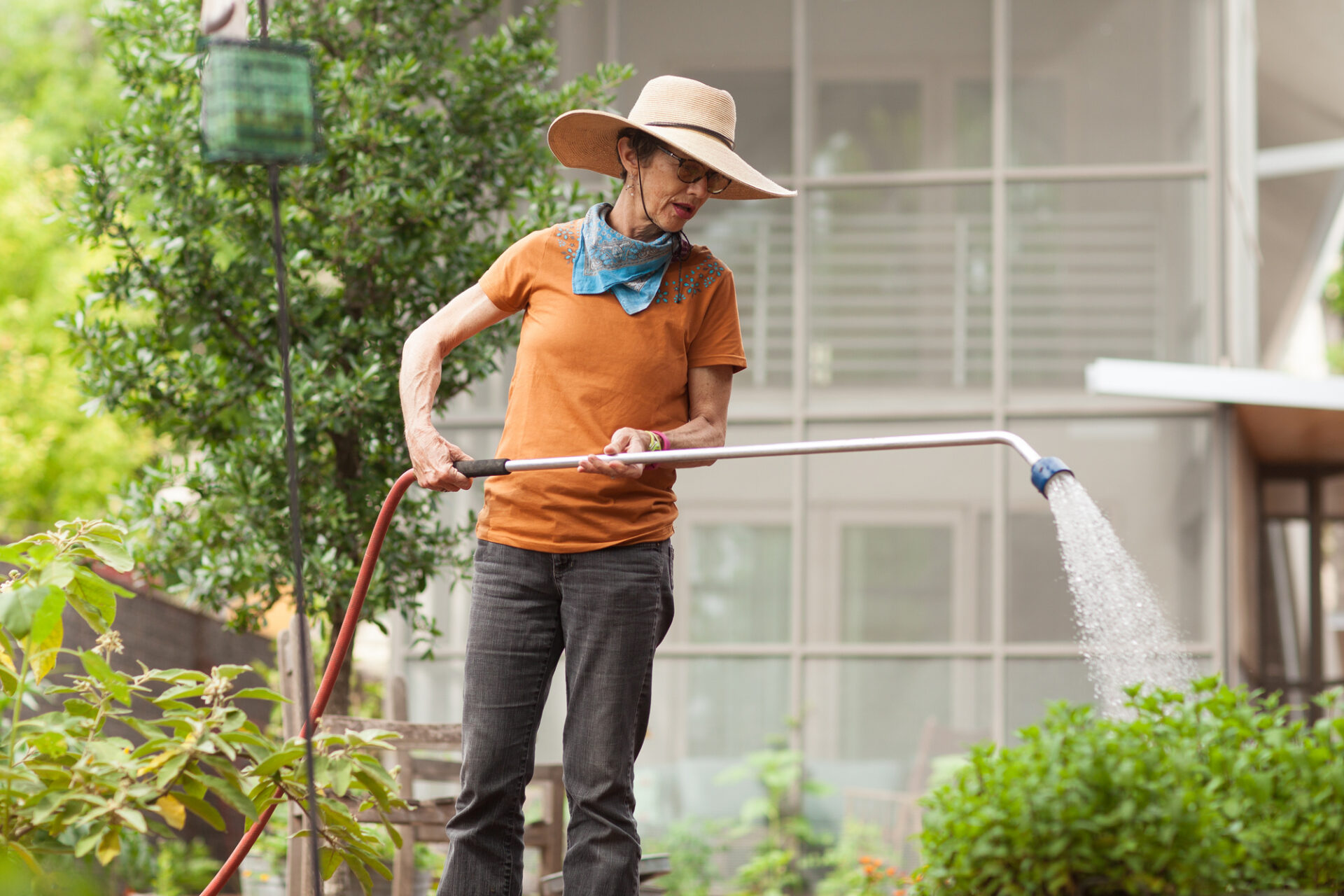
Water in the morning. Even if you have WaterSaver landscape plants, this is the season when the sun is scorching them. Leaves may be curling, folding and wilting just to get through the afternoon. The plants in need of help are those still visibly struggling the next morning, particularly if they were newly planted this spring. By hand-watering before 10 a.m., you can easily see where it’s most needed — and allow the roots to absorb it before the soil heats up.
If the top two inches of clay soil have dried out, it can be a bit hydrophobic at first, meaning water tends to run off before soaking in. (Don’t be afraid to test it with a finger). To provide a deep watering by hand watering, you may need to borrow a trick from the irrigator’s handbook and “cycle and soak” it or watering over the area several times.
Keep in mind you’re not trying to encourage tender new leaves in August. Growth slows down for grass and other plants during summer dormancy.
-
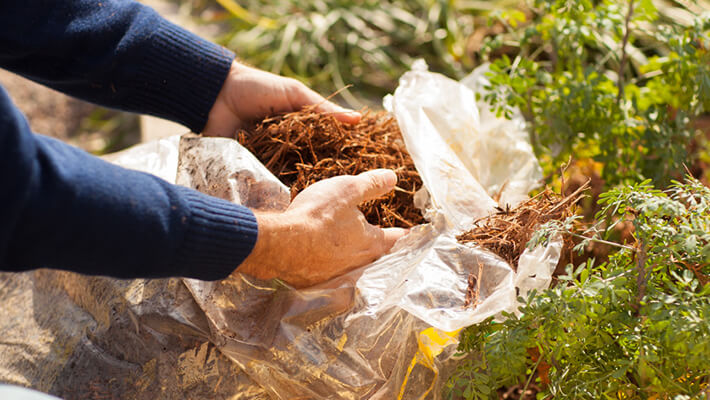
Got mulch? If any of your wilting plants are standing in bare soil by this time of the summer, this is when mulch can do the most good, dropping soil temperature by up to 40 degrees. Apply it after watering to help to lock in moisture.
-
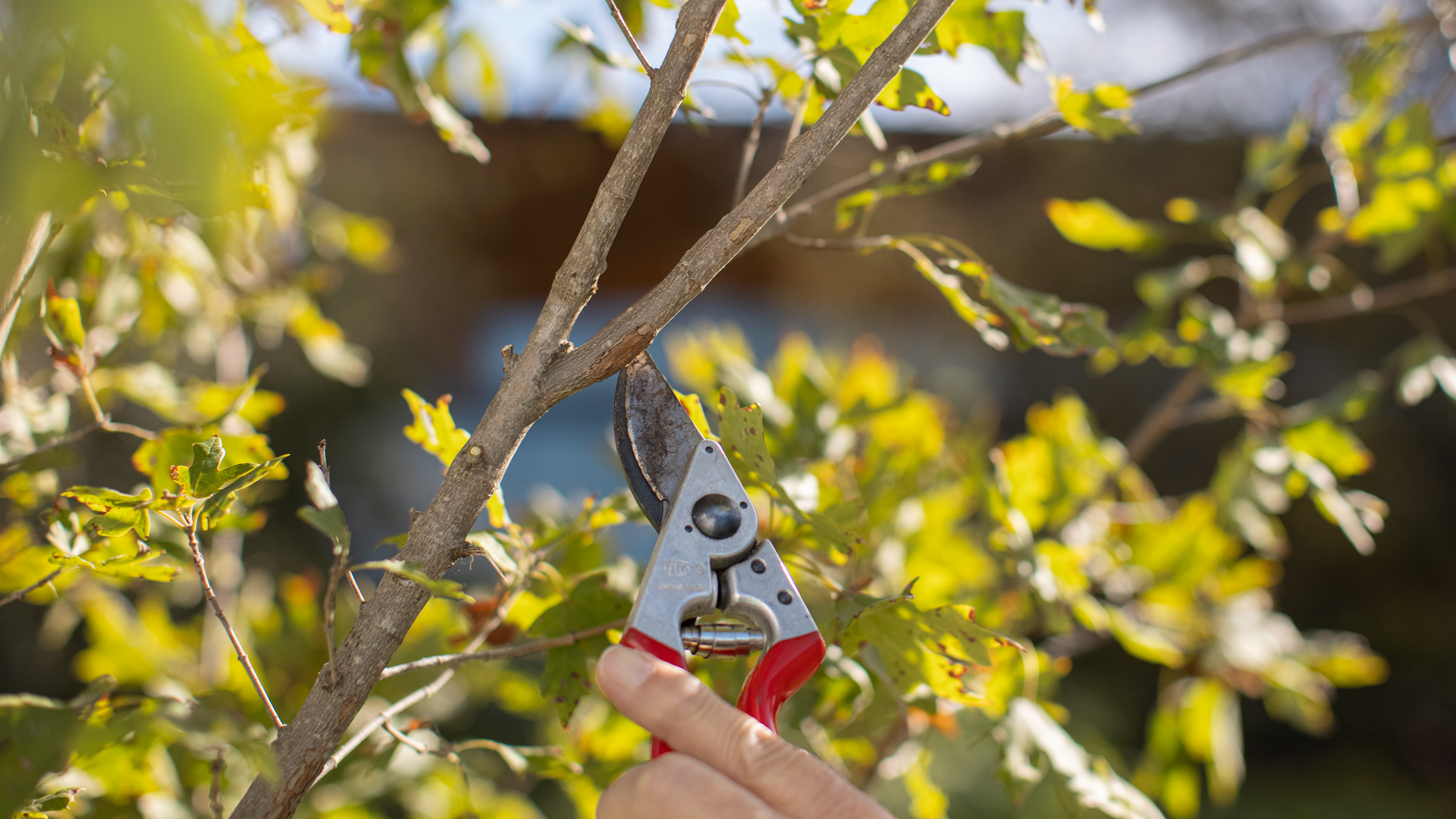
Prune gently. Many plants were so well watered by rains in June and July that they’re unusually overgrown this August (for me, these include crownbeard, Turk’s cap, flame acanthus and plateau goldeneye.) It’s okay to clean them up a bit, but avoid going overboard with shaping, shearing, hedging and heavy cutting, especially on already-stressed plants — this isn’t the time to encourage tender new growth.
-
Take care of your trees. Trees are a long-term investment that, like mulch, can decrease the surface temperatures of everything underneath by 40 degrees or more on a summer day. A good rule of thumb is to hand water trees once a month in summer if it hasn’t rained (and it’s been over a month since our last significant rainfall).
Although their fine feeder roots can extend out to twice the height of the tree, you’ll get the most bang for your hand-watering buck if you apply water around and inside the circular dripline under the tree’s outer branches. Avoid wetting the trunk itself.
If mature established trees are still growing in the middle of a turfgrass lawn, converting that turfgrass to mulch will help protect them and the soil underneath over the long term.