

Knowing the depth of your soil can help you design your garden and determine its irrigation needs.
How deep is your soil?
The answer to this question should guide your garden design and irrigation habits. To find out how deep your soil is, just grab a screwdriver and start poking around. Verify your findings by lining up the screwdriver to a ruler.
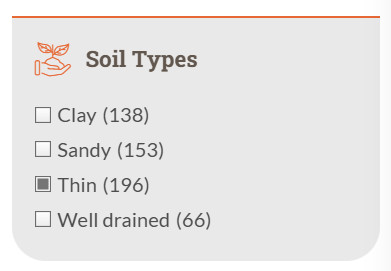 For shallow soils (less than 6 inches), the general rule is to minimize turfgrass, which needs deeper soils to thrive. If you do have shallow soils, choose plants that can thrive there. Use the Advanced Search feature of our Find a Plant list and check the “Thin Soils” box to get a list of plants to choose from. Hand-watering is all that’s needed to maintain these plants.
Deep soil (greater than 12 inches) offers you the most options when it comes to turf. In research tests, turfgrass planted in deeper soil has been able to survive sixty days or more without supplemental water in summer. Still, try to limit the amount of turf you use. We never recommend using it as a default ground cover, but rather as a functional part of the landscape. If possible, plan for only as much grass as people or pets will use. As for irrigation, once a week watering is all that’s needed. Top dress annually with compost to improve the soil’s ability to retain moisture.
Many locations with deep soil are also able to support large shade trees. If you’re lucky enough to have oaks or other trees in your yard, limit the grass underneath them.
For the healthiest trees, remove or limit grass out to the tree drip line. Instead, apply mulch and natural leaf litter. There’s a reason you don’t see trees on the grasslands or grass in a forest: they prefer to live separate lives, if possible. With summer approaching, shade makes a huge difference in the landscape!
