
If your goal is long-term success of a native turfgrass lawn, get to know the difference between Bermuda and buffalograss.
There’s no greater accomplishment for the native plant enthusiast than the establishment of a native grass lawn, in my opinion. Depending on the mix, a native grass lawn stays shorter and green longer, isn’t as damaged by drought, and greens up from summer dormancy quicker than other imported turfgrass species.
Two common native turf grass seed mixes include buffalograss (Boutelou dactyloides), curly mesquite (Hilaria belangeri) and blue grama (Bouteloua gracilis). My favorite look is 100% buffalograss, but having the other two species mixed in allows for a fuller lawn that thrives in a greater range of conditions. Of the three, buffalograss also looks the most like Bermuda grass.
One of the hardest parts of starting a buffalograss lawn is removing the old turfgrass, especially if that grass is Bermuda. But even after establishment, Bermuda grass will be waiting to invade your lawn from every side. So, it’s imperative to weed out Bermuda grass as soon as it appears, hopefully before it flowers and sets seed.
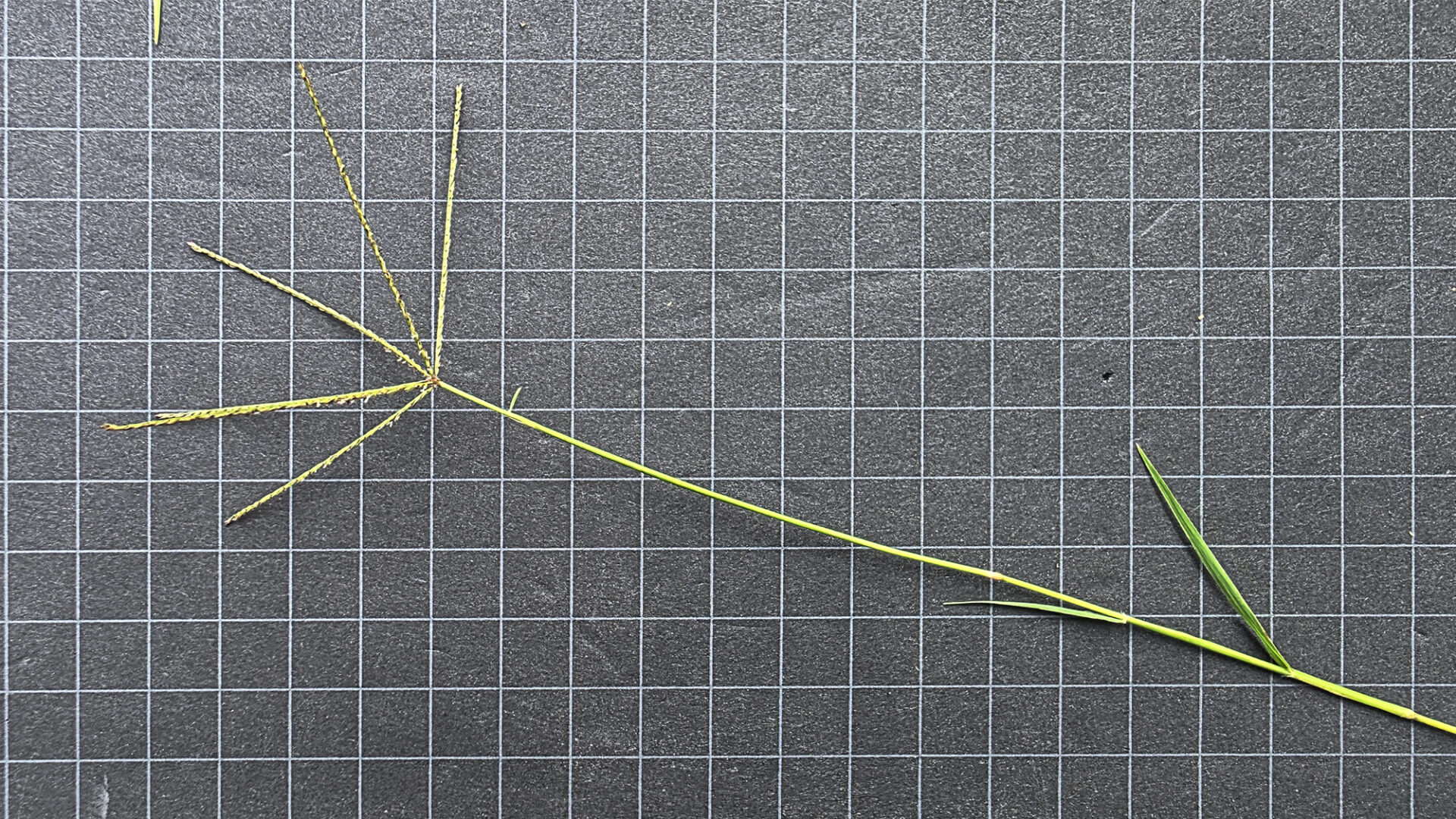
The inflorescences of Bermuda grass and buffalograss are easy to tell apart. Bermuda grass produces an inflorescence with three to five branches all springing from a single point, and tiny flowers along those branches. I think they resemble an outline of upside-down pyramids.
An interesting quirk of buffalograss is that it produces two kinds of flowers: pollen-producing flowers that stick up above the leaves like flags and seed-producing flowers that are born near the ground on short stems.
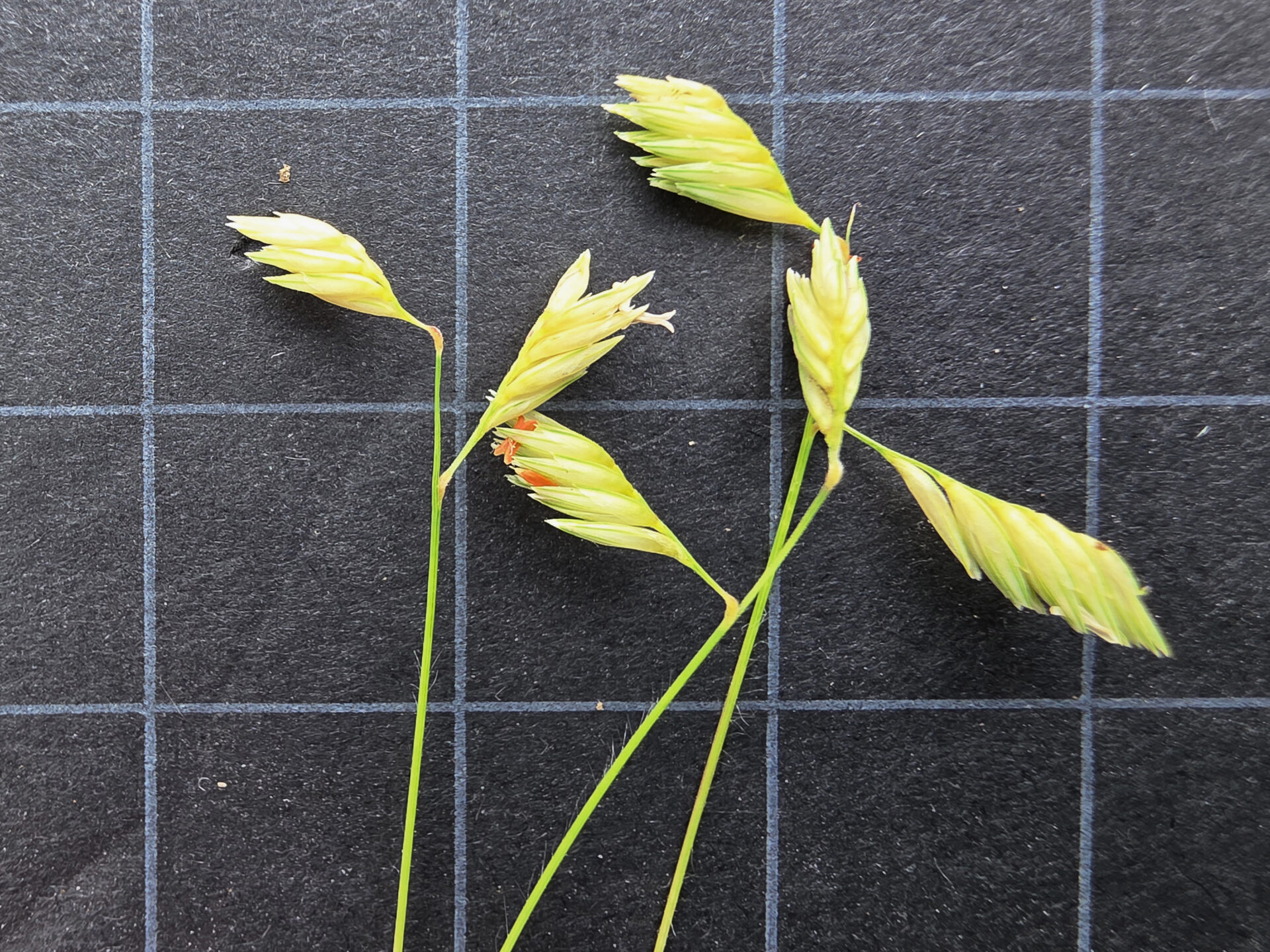
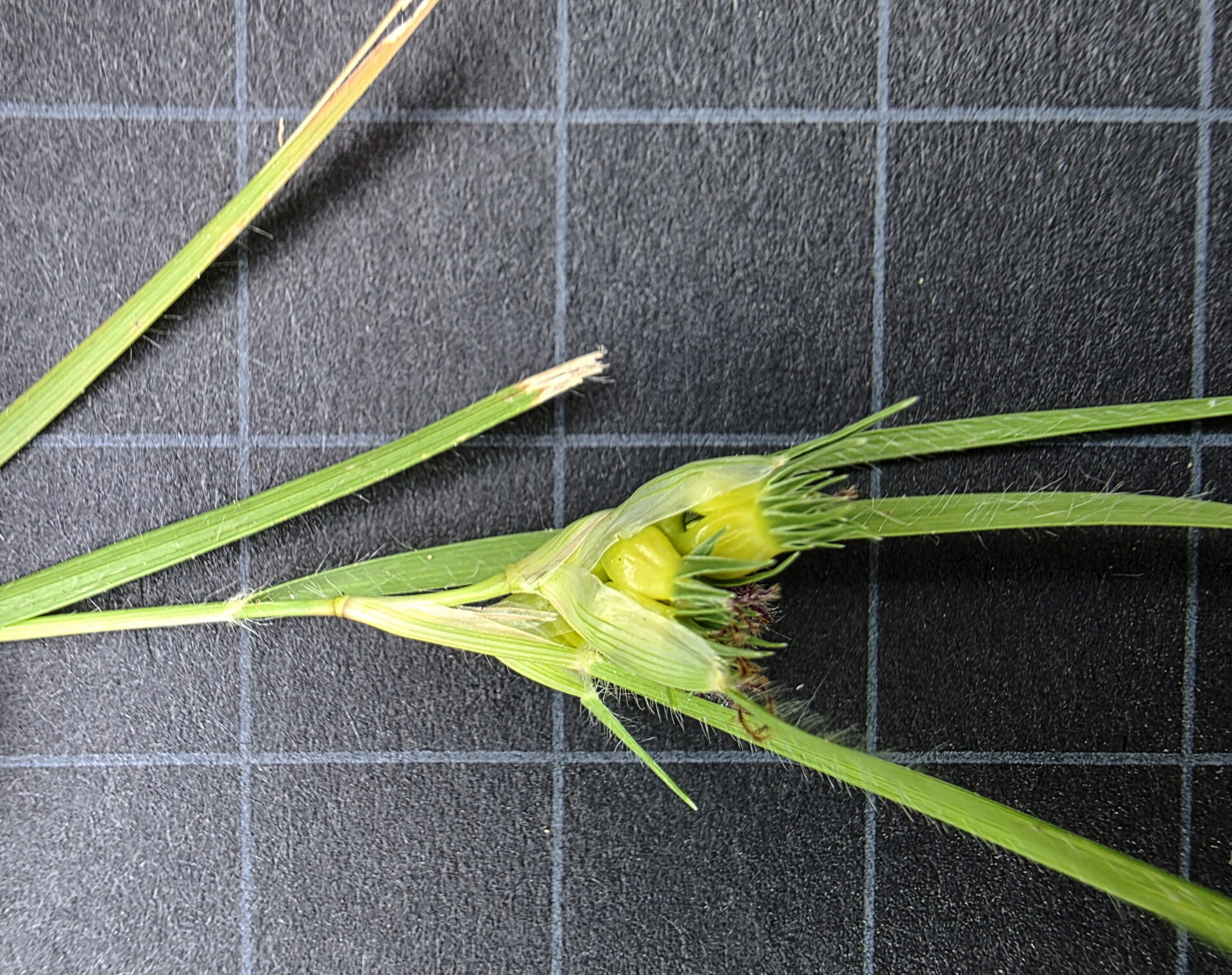
Again, the two are straightforward to distinguish when flowers are present. But separating Bermuda grass from buffalograss before they bloom is not as straightforward. Both are plants in the grass family, so they share all the general characteristics of that family.
Additionally, both have the same growth habit, meaning they’re low-growing grasses that spread by above-ground stems called stolons that run parallel to the soil surface. You’ll need more than a casual familiarity with both to successfully defend your buffalograss.
Here are a few key vegetative differences you’ll need to learn to weed successfully:
- Look at the hair. Bermuda grass is less hairy on the stems, leaf sheaths and leaf blades. However, right at the leaf collar, where the leaf sheath transitions into the leaf blade, there is often a tuft of white hair. By contrast, Buffalo grass leaves, especially the blades, are usually covered with a sparse but even coat of hair.
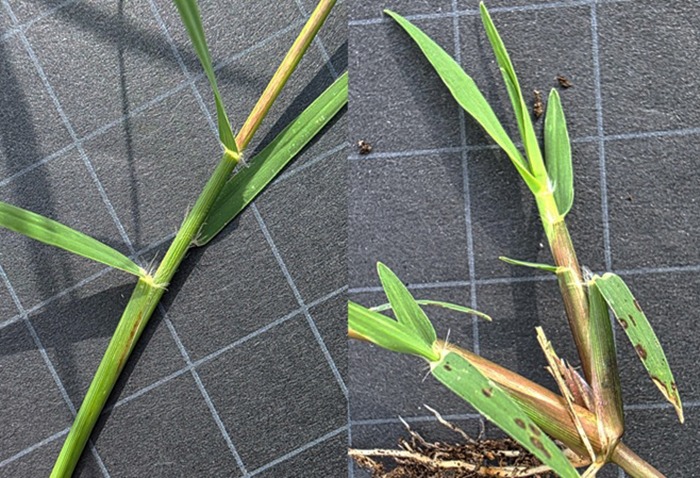
Bermuda grass has tufts of hair at the leaf collars. 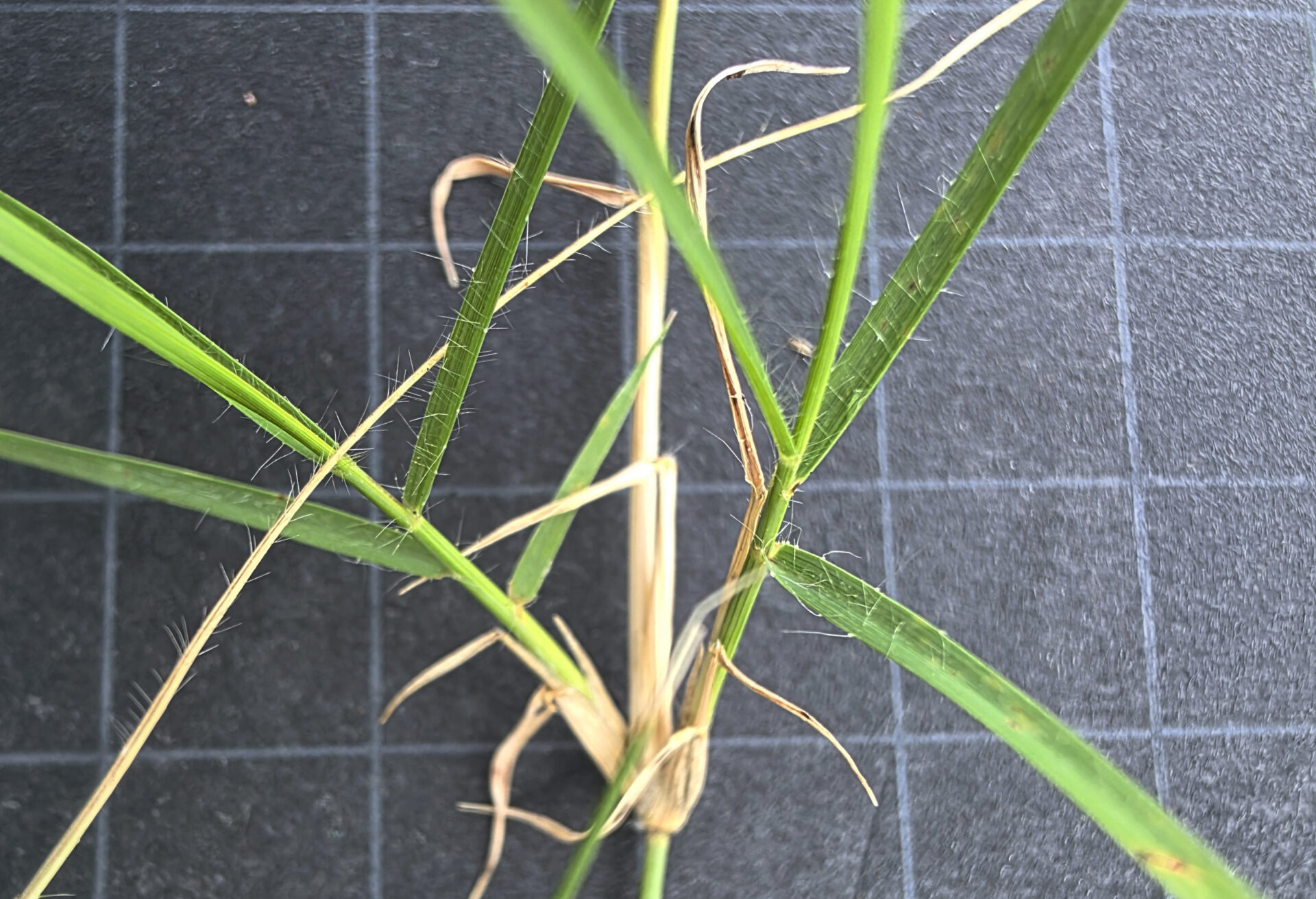
Buffalograss is covered with sparse hairs. - Observe the way the stolons branch. Buffalograss produces two or more short vertical leaf stems at the node; over time more stems get added creating little tufts. Over time the stolons will branch and send out more lateral stems, but it’s a slower process than Bermuda. Bermuda grass has a couple of stolon forms. Sometimes it will create long unbranching stolons, other times the stolon will branch at every node like buffalo grass, but early on the node will produce more lateral stems and/or one vertical stem per node.
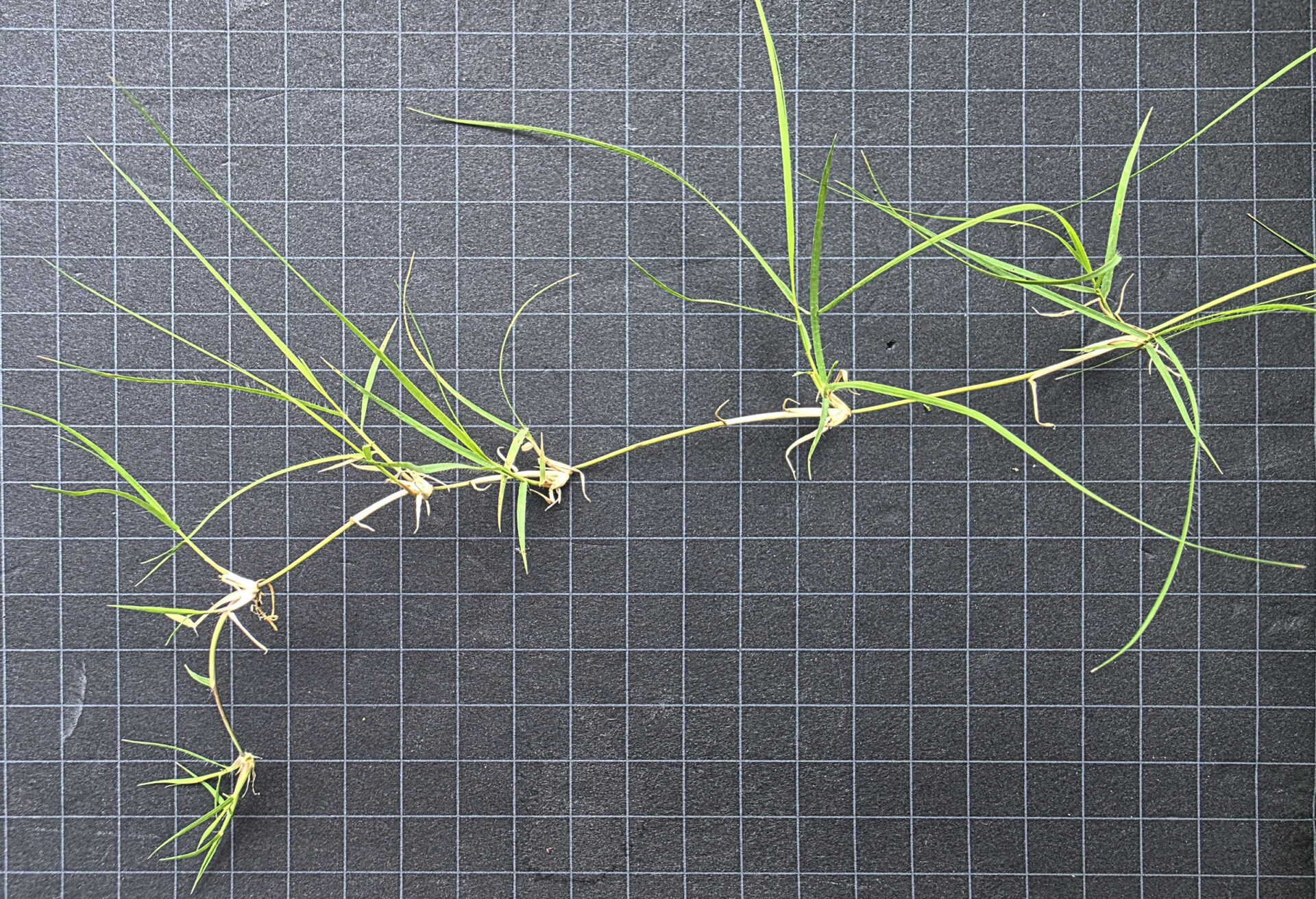
Buffalograss stolons have little tufts of leaves at each node. 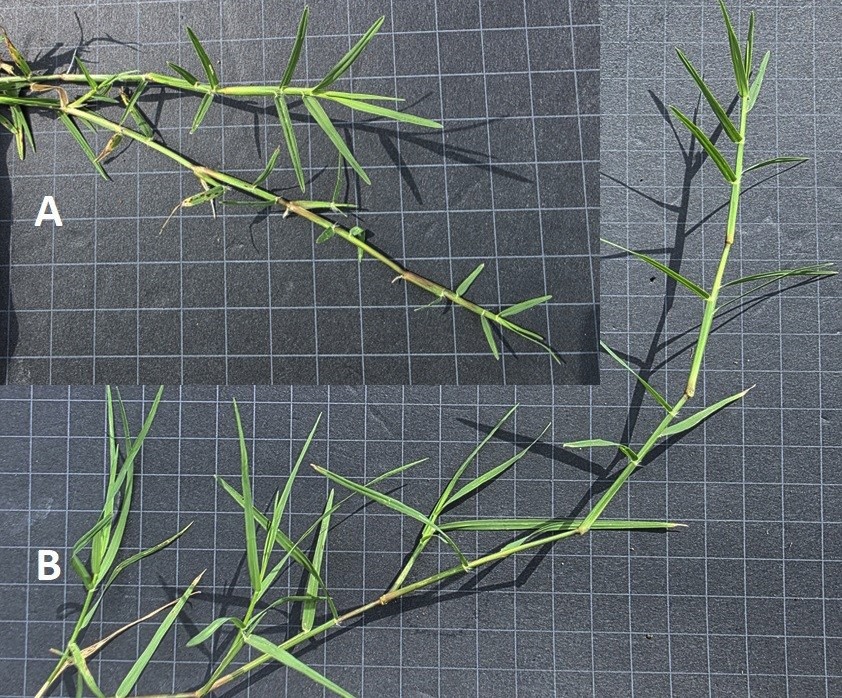
A. For Bermuda grass, stolons often form secondary branches. B: Bermuda grass may also produce long, unbranched stolons. - Look at the general growth habit. The stolons and leaves of Bermuda grass are more robust than those of buffalograss. The stems and leaves are about twice as wide. Leaf blade length is variable with Bermuda grass, but those of buffalo tend to be much longer than they are wide. The vertical stems of Bermuda grass are stiffer and have longer leaf sheaths, giving them height and making them look unkempt without timely mowing. The leaf blades of buffalograss are relatively long, but the stems stay short, which is why mature buffalo grass remains under six inches even without mowing.
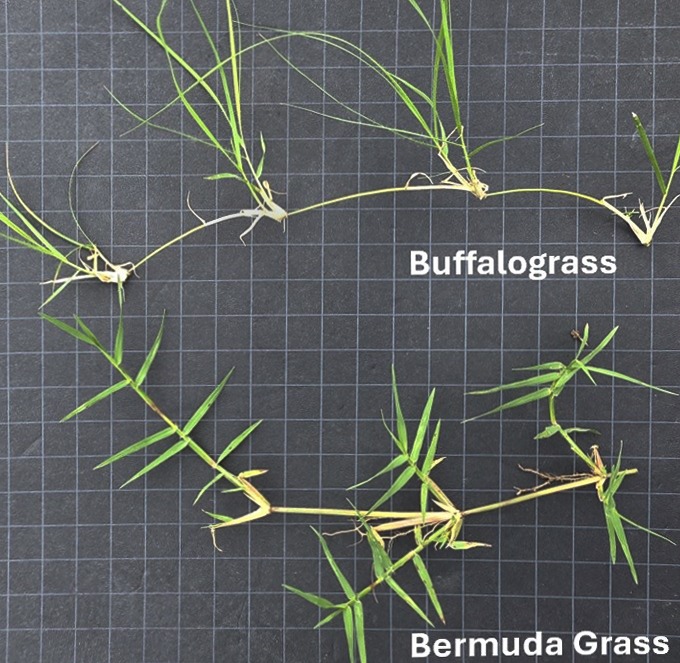
Buffalograss more slender leaves and stems. 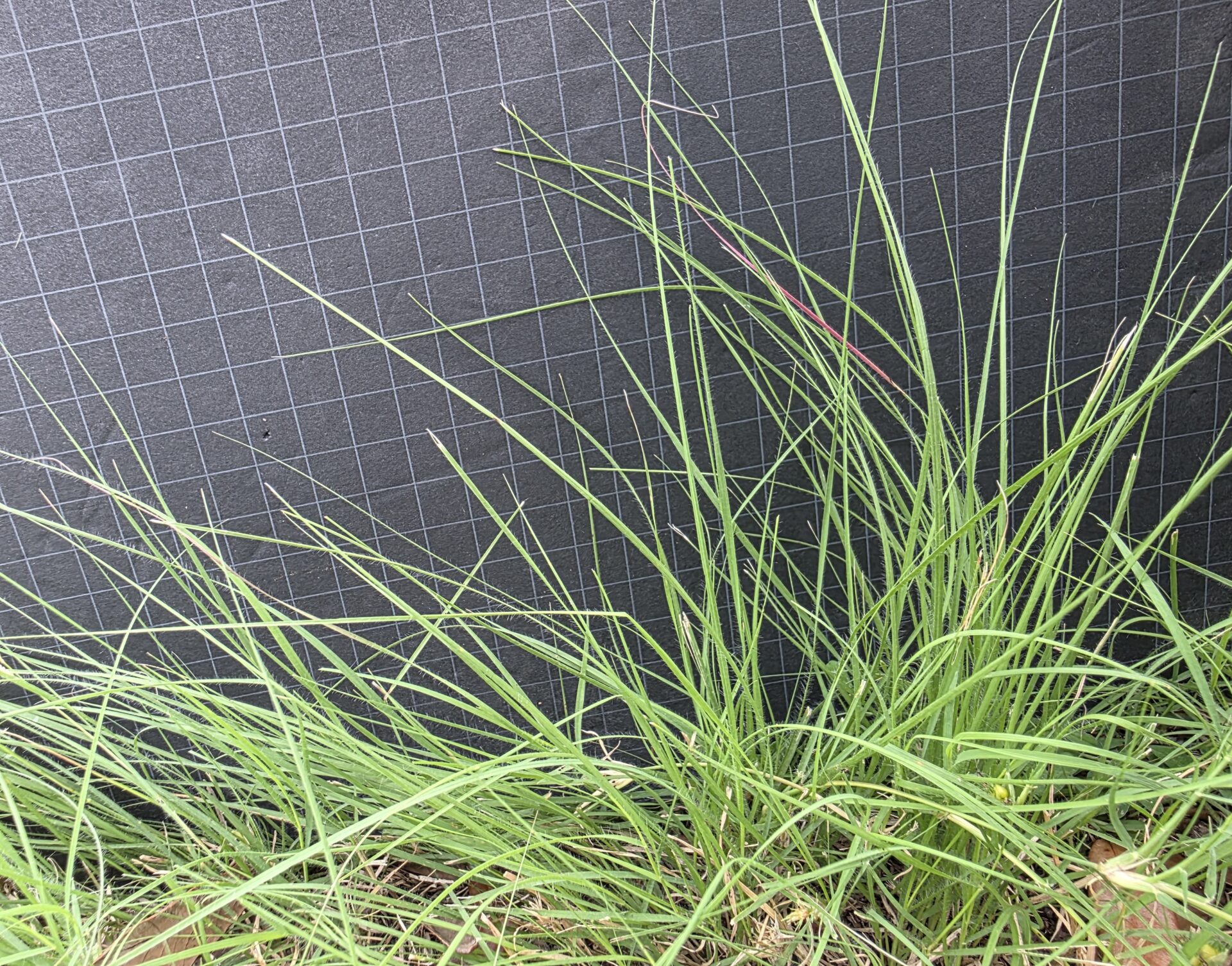
The short vertical stems of buffalograss mean that the leaves grow from near the ground’s surface and mowing is rarely needed. 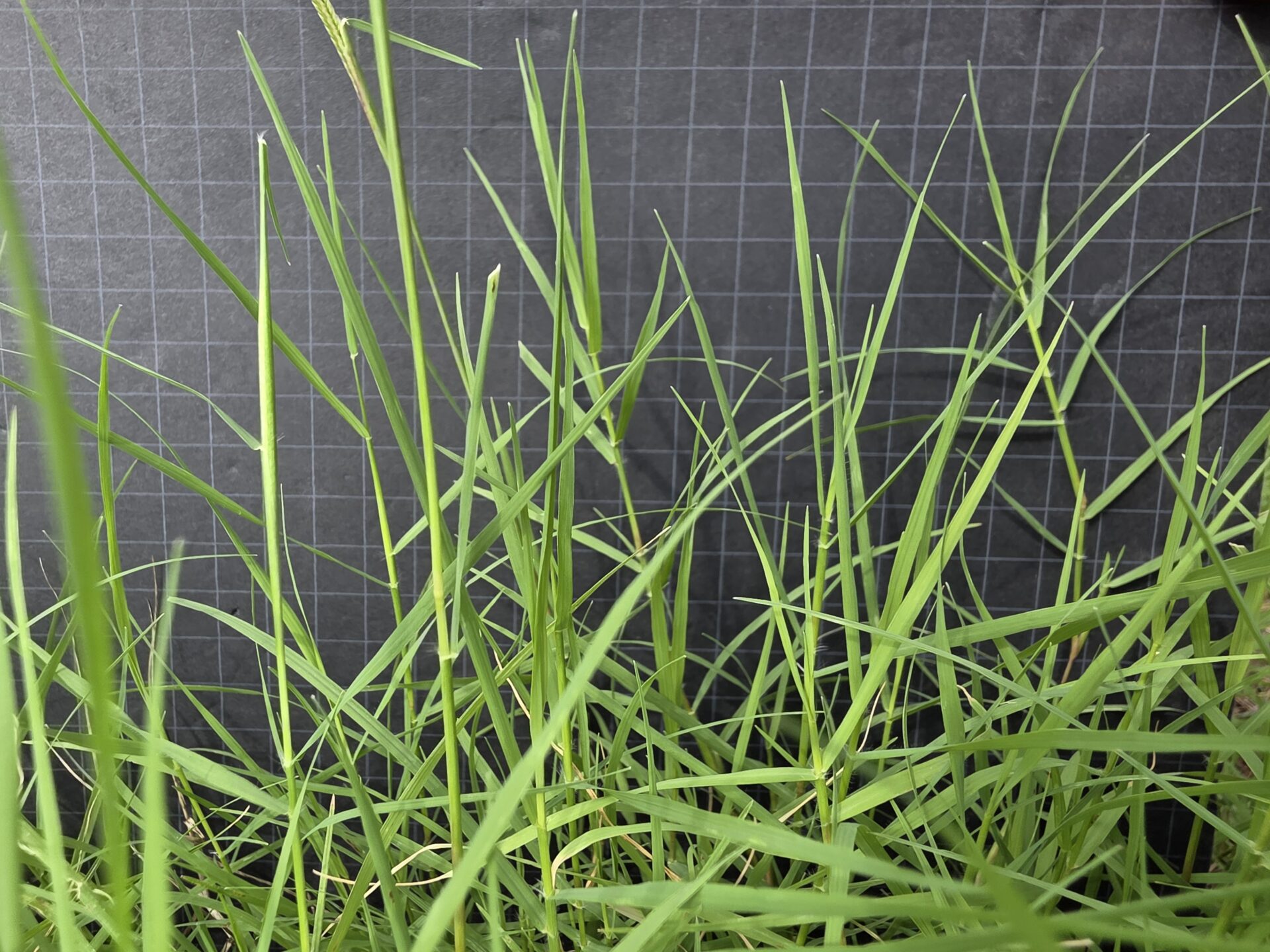
Bermuda grass produces tall vertical stems that need to be mowed to maintain a tidy look.
Bermuda grass is a more robust plant, has coarser leaves, gets taller, and grows more quickly than buffalograss. It can grow over, shade-out, and replace buffalograss if it gains a foothold, beginning a downward spiral. When it rains (or you water the grass), Bermuda grass grows quickly and needs to be mowed. Compared to buffalo grass, Bermuda bounces back from mowing more quickly, therefore increasing the need to mow further and favoring its own spread.
However, over the past few years of drought conditions, I’ve noticed patches of buffalograss unintentionally expanding in a few of my neighbor’s yards. These are yards that get zero supplemental water throughout the year and therefore go entirely dormant in the summer (yes, without supplemental water even buffalograss goes dormant and turns a straw-color). Because the lawn is dormant, mowing is infrequent — which reduces Bermuda’s competitive edge.
Buffalograss returns from summer dormancy quicker than Bermuda, allowing small expansions each time a summer thunderstorm passes through.
The silver lining here is that a mature buffalograss sod is rather self-sustaining once it’s fully established. Proactively catching and removing Bermuda grass where it does creep in will ensure your lawn stays thick and healthy.
Contrast a little weeding and once- or twice-a-year mowing with the endless tread mill of watering, fertilizing and mowing needed to maintain a healthy Bermuda grass lawn.
The work required to start your native lawn is totally worth it when you get to sit back and watch the elegantly arching leaves of mature buffalograss dance in the wind of an approaching summer rain shower.