A well-maintained backflow device keeps muck like pesticides and dog poop out of your drinking water. If it fails? That’s when things can get scary.
Like the name implies, backflow is the backward flow of water inside pipes. If it occurs in your irrigation system, water contaminated with dirt, chemicals or other foreign substances can flow back into your home.
It’s why city ordinance requires backflow preventers to be installed on all residential and commercial irrigation systems. If you have an in-ground sprinkler system, you can usually find this device near the water meter.
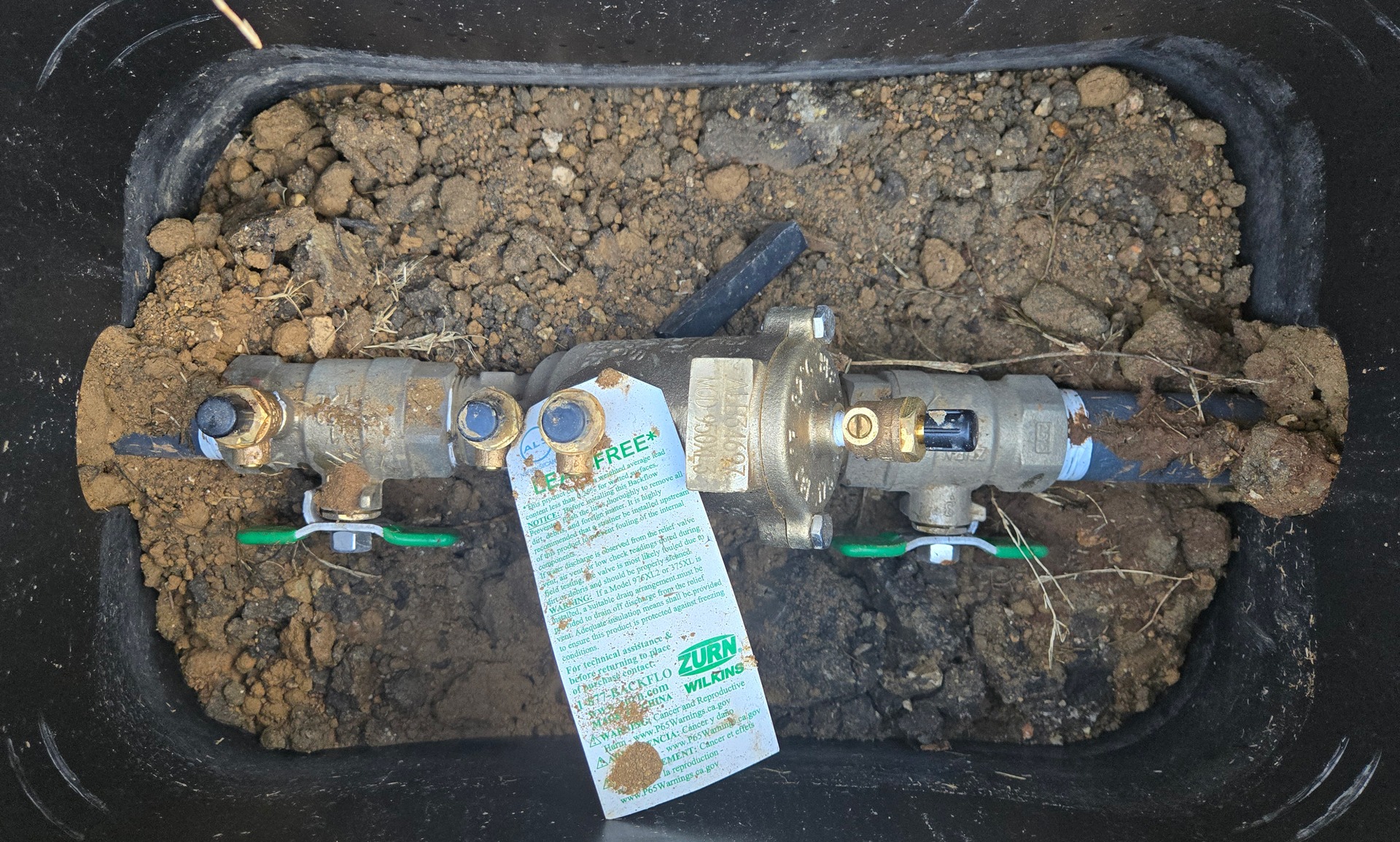 |
| Double-check devices are the type installed below ground, usually underneath a 12-by-17-inch green lid. |
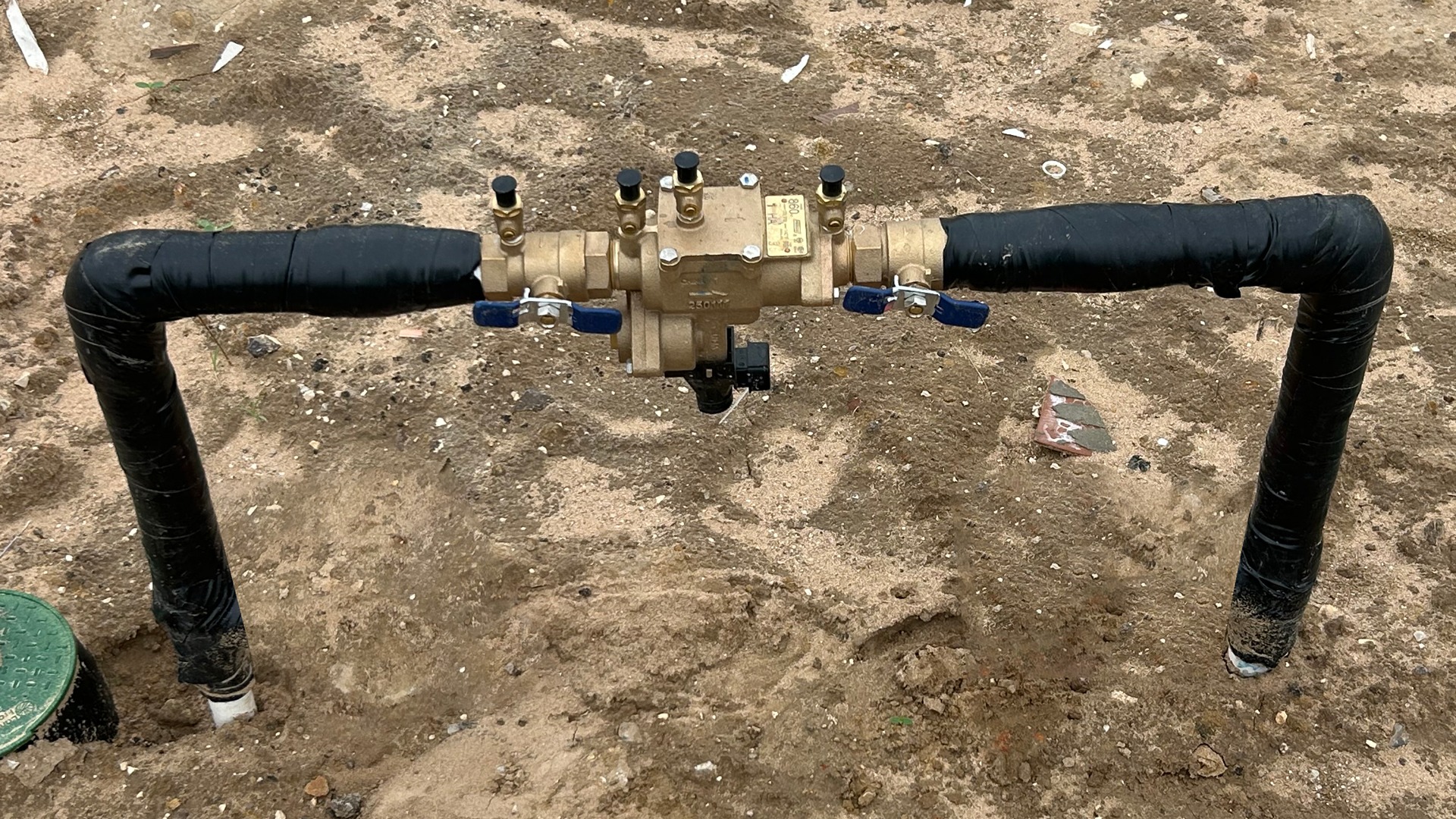 |
| Reduced-pressure assemblies are the type that stand up 12 inches above the ground. They’re required where high-health hazard exists, such as a septic system or well on the property. |
Here’s the scary part: Without this device, some situations could cause water from your irrigation system to flow into your home’s or even your neighbors’ drinking water.
When your sprinkler system isn’t running — like when you turn it off for the winter season — the sprinkler heads become conduits for dirt, chemicals, and all manner of pathogens to seep silently into your underground pipes. Those contaminants are usually flushed out by pressurized water when your irrigation system clicks on in spring.
But if there’s a dramatic drop in water pressure in your neighborhood — perhaps a main break or fire — water can instead flow backwards, potentially escaping your irrigation pipes and flowing into city utility lines that deliver clean, potable water.
Backflow situations are serious. That’s why it’s important to have your backflow device inspected, tested and serviced annually. Annual testing is required by City of San Antonio ordinance, state regulations and SAWS’ Cross-Connection and Backflow Prevention Control Program to protect you and the public water supply.