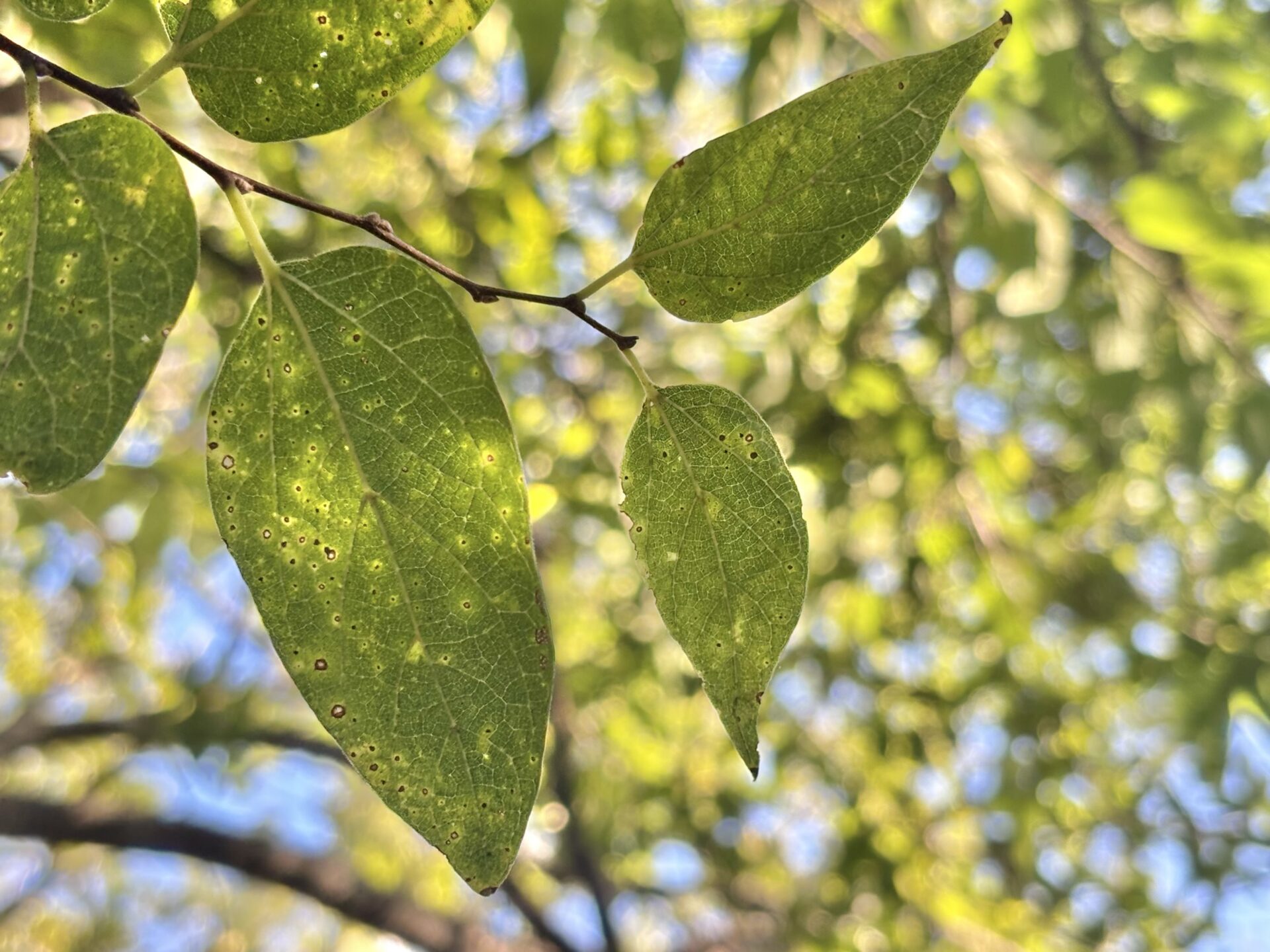
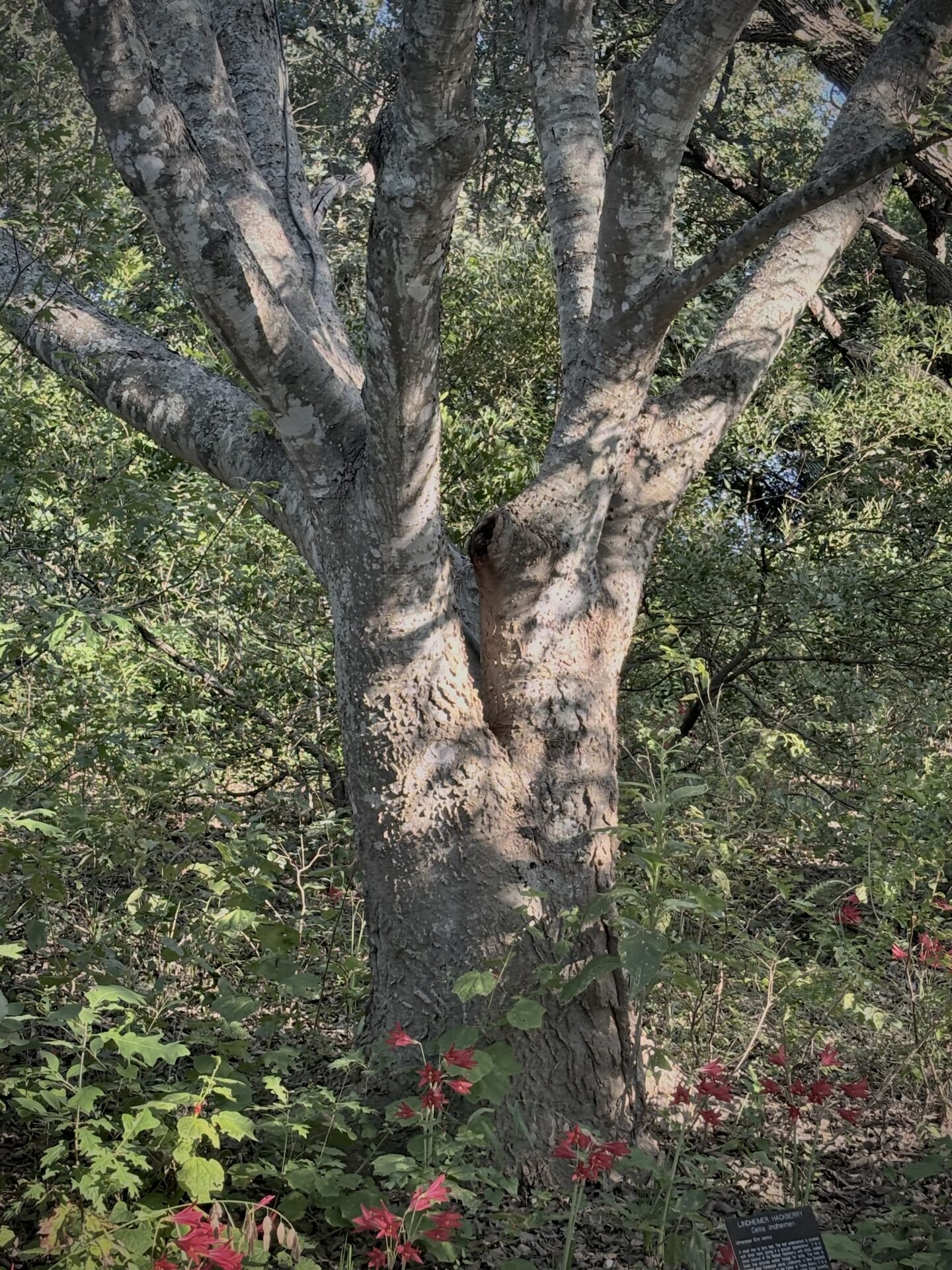
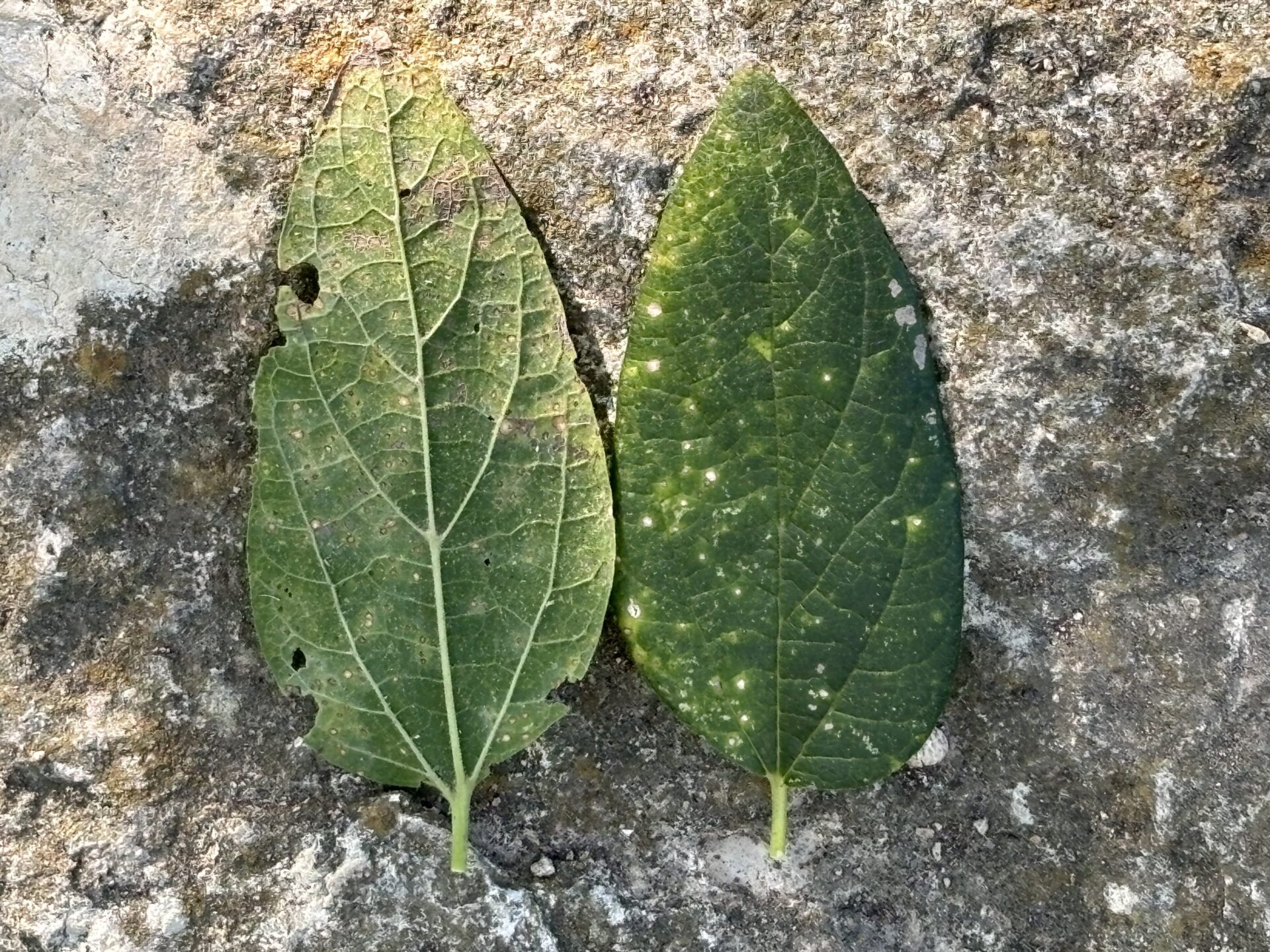
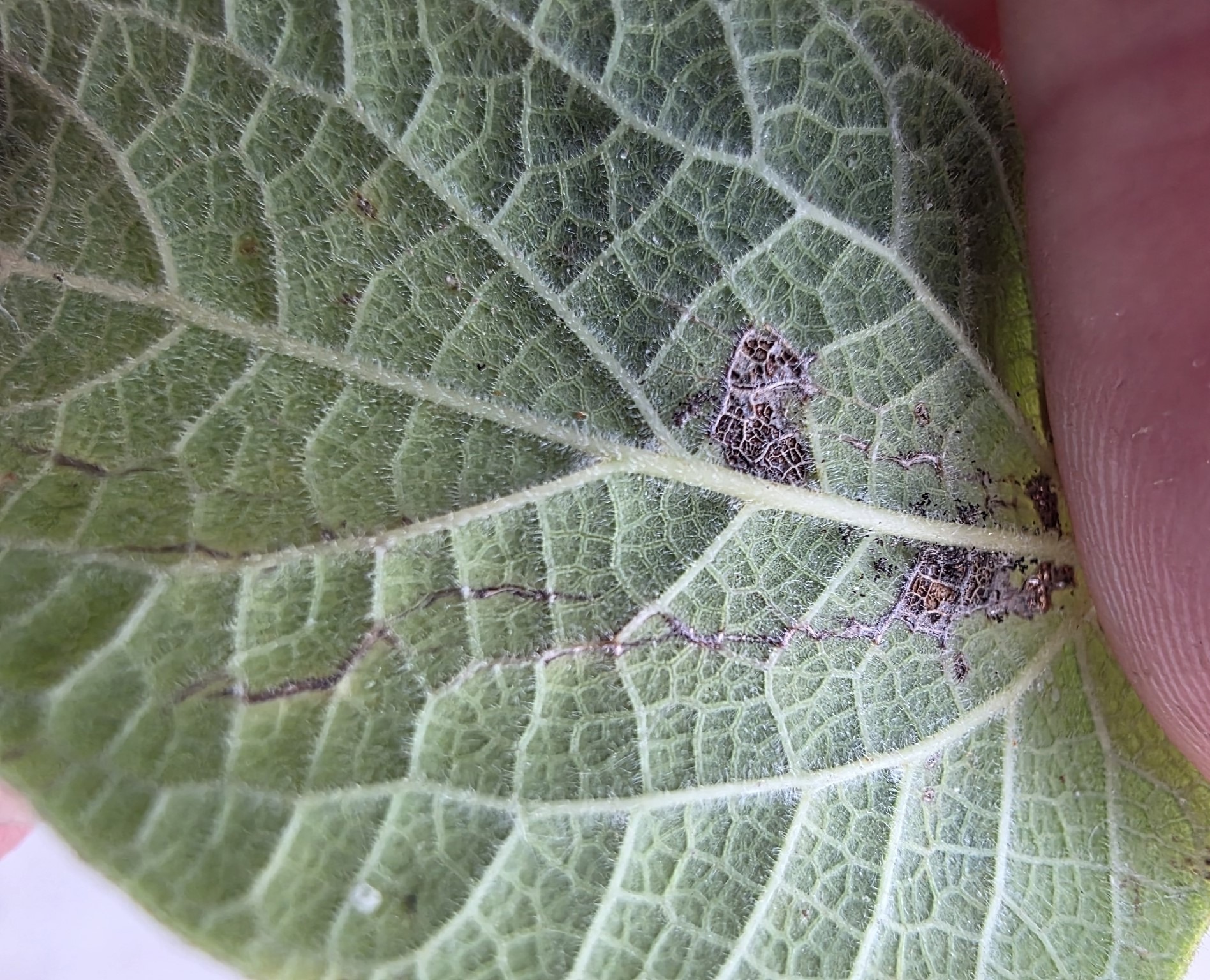
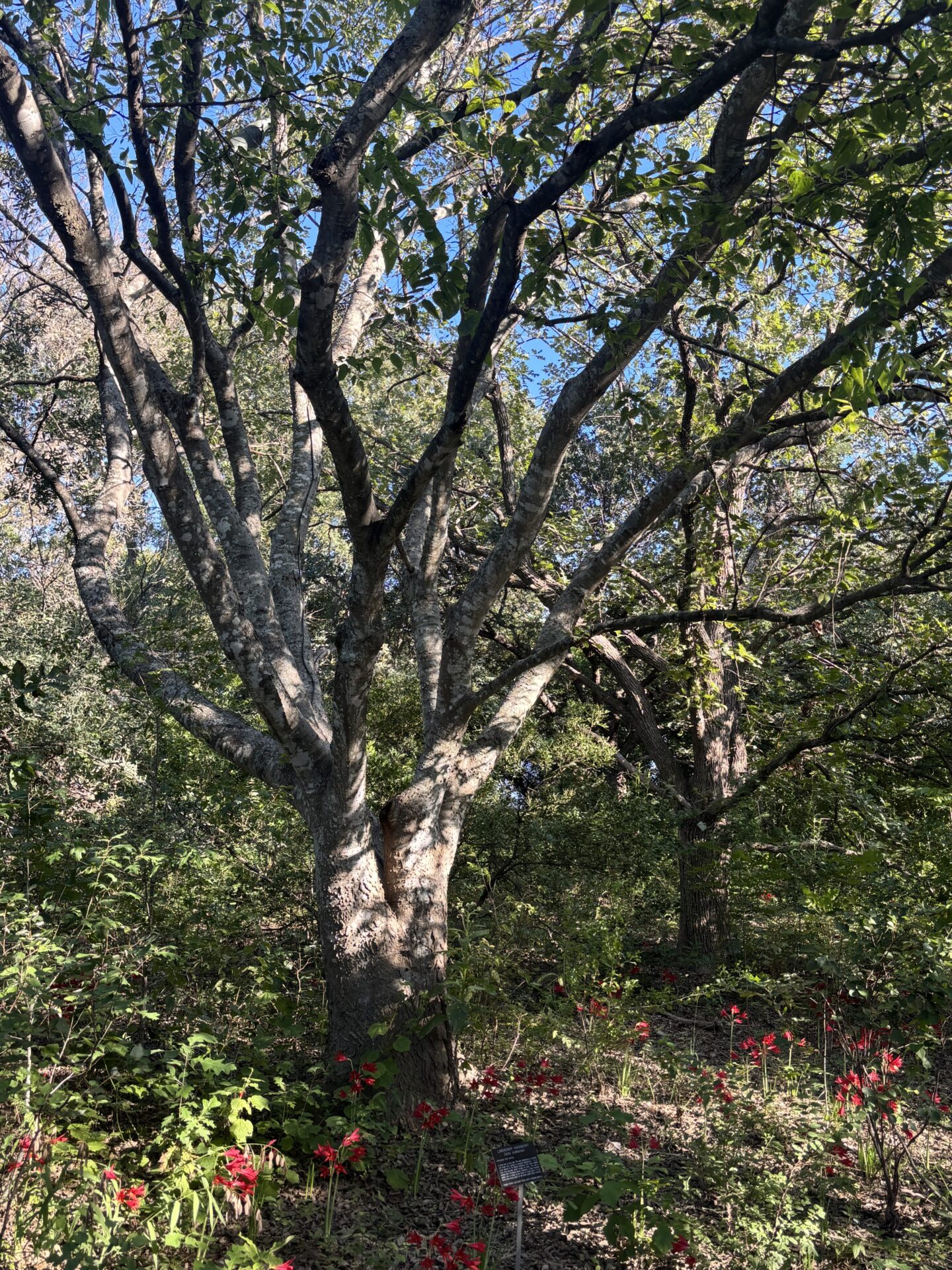
Sun or light shade. Deciduous; mature specimens may have corky projections on their bark. With careful inspection, Lindheimer’s can be distinguished from other hackberries by the pale underside on the leaves in contrast to the green upperside; this is caused by the veins being densely covered in white hairs. Leaves may be also less likely to taper to a pointed tip (acuminate) and somewhat more ovoid in shape. This local hackberry variety is native to the Edwards Plateau around San Antonio and presumably south into Mexico, though it may be missed by the casual observer.
Hackberry wood is prone to split, warp and decay, hence not used in most carpentry or construction. However hackberry is very valuable to wildlife, thanks to the fruit that bear a sweet, date-like skin. In addition, like other hackberries, Lindheimer’s is a fast-growing source of shade in the landscape.
Origins: Central Texas, to NE Mexico
Maintenance
Whether you’re trying to cultivate hackberry or not, expect some effort to weed it out of flowerbeds and fencelines where it tends to be planted by birds and other wildlife. To cultivate it, make cuts only at a bud or branch to focus on minimizing damaged or rubbing limbs.